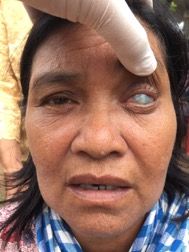

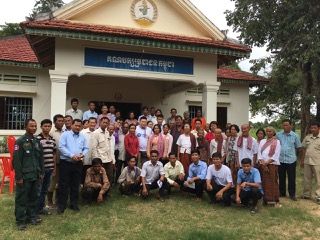


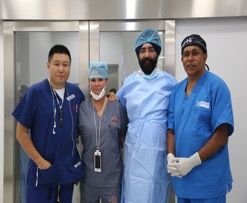


People were killed for being academics during the 1970’s in Cambodia
Anti-intellectualism is hostility towards, and mistrust of, intellect, intellectuals, and intellectual pursuits, usually expressed as the derision of education, philosophy, literature, art, and science as impractical and contemptible. Moreover, allegations of anti-intellectualism can constitute an appeal to authority or an appeal to ridicule which attempts to discredit an opponent rather than specifically addressing his or her arguments. Governmental anti-intellectualism ranges from closing public libraries and public schools to segregating intellectuals in an Ivory Tower ghetto to official declarations that intellectuals tend to mental illness, thus facilitating psychiatric imprisonment, then scapegoating to divert popular discontent from the dictatorship.
Gallery

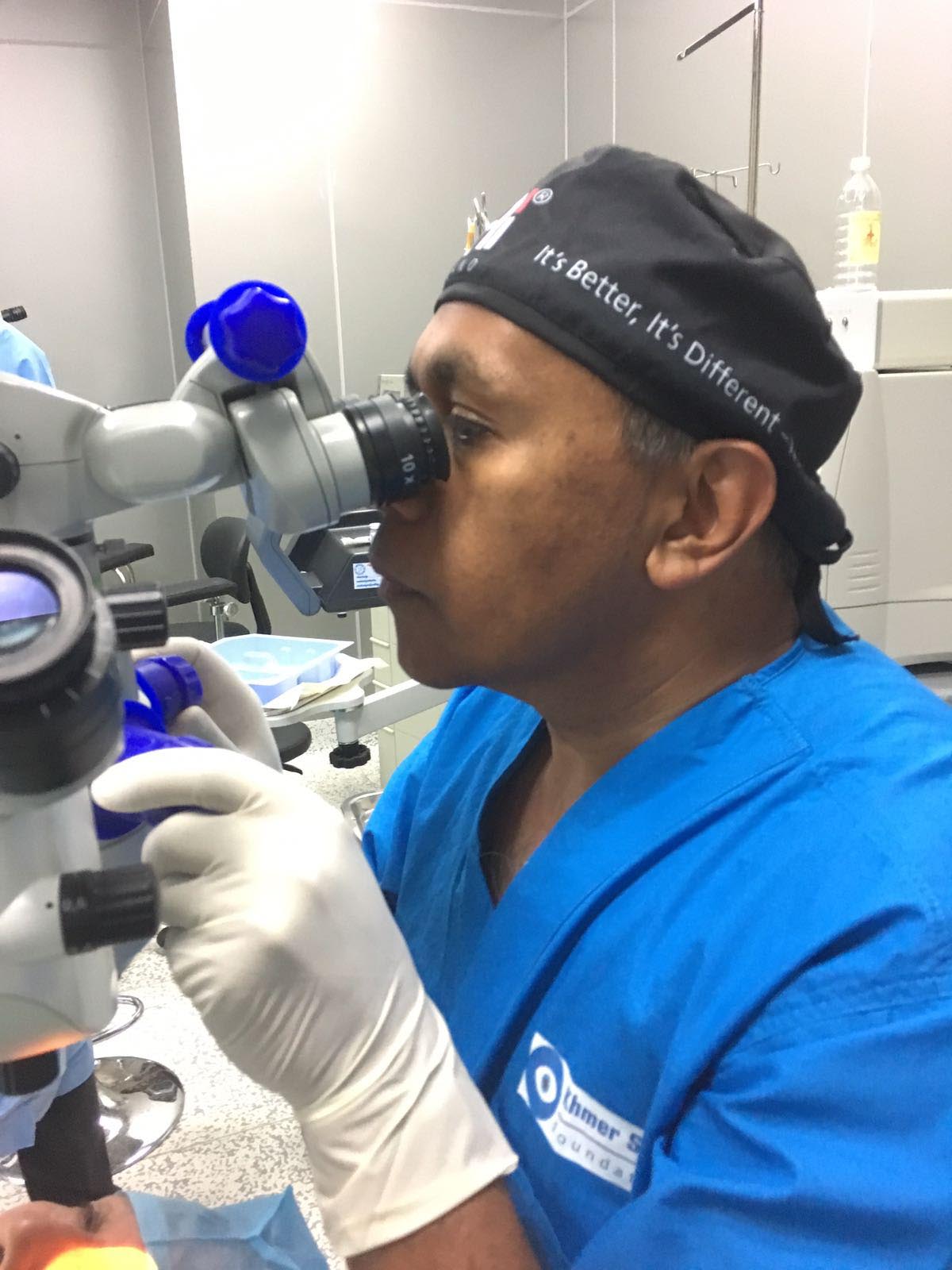














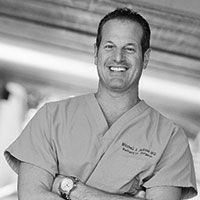


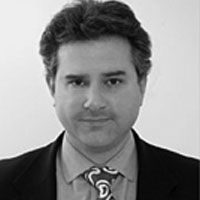
Professor Dan Reinstein, MD, MA(Cantab), DABO, FRCSC, FRCOphth, FABO Over his 18-year career in ophthalmology, Professor Dan Reinstein has built an international reputation as a uniquely experienced and pioneering laser eye surgeon. He graduated from Cambridge University, underwent postgraduate training in the USA and Canada and was made a professor at the University of Paris VI and Columbia University in New York before returning to the UK to establish the London Vision Clinic.
After qualifying from Cambridge in 1989, Doctor Reinstein became a Fellow at the bio-acoustics engineering department at Cornell University, New York. There he developed a method of using high frequency ultrasound scanning which could be used to scan the individual layers of cornea to within one micron – 1/100th of the width of a human hair and diagnose complications of laser eye surgery to enable surgical repairs. Now the scanner is also used extensively for increasing the safety of laser eye surgery even further by diagnosing cases to exclude from surgery. Excited by the possibilities of developing safer, more accurate eye surgery, Through his patents administered by Cornell University a commercialisation of his scanner is underway in the USA with a prototype called the Artemis™ VHF digital ultrasound scanner. Equipped with the world’s most accurate corneal scanner Professor Reinstein has been in a unique position to be able to diagnose and treat complications of laser eye surgery as well as develop new methods of treatment previously impossible without the Artemis sub-surface imaging technique.
Concurrent with his busy clinical practice he continues to work closely with Carl Zeiss Meditec for whom he developed the treatment for presbyopia (ageing eyes) called Laser Blended Vision as well as the most advanced form of laser eye surgery now performed as a keyhole procedure called ReLEx smile.


Dr. Robert Ang is Asian Eye Institute's senior refractive surgeon. He performs laser eye surgery for patients with nearsightedness, farsightedness and astigmatism who wish to decrease their dependence on glasses or contact lenses. He is the only doctor in the Philippines to have finished two subspecialty programs at the Massachussets Eye and Ear Infirmary, Harvard Medical School (Glaucoma and Cornea and Refractive Surgery). He completed his medical degree through the highly selective seven-year INTARMED course at the University of the Philippines.
He has authored several book chapters and international publications on refractive surgery and glaucoma. His special interest inlcudes Zyoptix customized LASIK, LASEK, PRK, dry eye, corneal transplantations, cataract and complicated anterior segment surgeries. He is the Philippine representative to the Asian Refractive Committee - a prestigious group of laser eye surgeons representing each country in Asia whose objective is to advance the science of refractive surgery in the region.
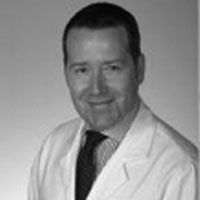
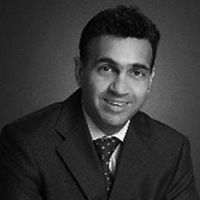
Assoc Prof Jod Mehta graduated from Guys and St Thomas’s Medical School, University of London, UK in 1995. He did his basic and advanced specialist training at Moorfields Eye Hospital, UK and also did sub-specialized fellowship training in Cornea External Disease and Refractive Surgery at Moorfields Eye Hospital and Singapore National Eye Centre.
He is a member of the Royal College of Ophthalmologist UK, the Royal College of Surgeon of Edinburgh, the American Academy of Ophthalmology, the Association for Research in Vision and Ophthalmology, the Singapore-Malaysian Ophthalmology Society and the Asian Corneal Society. He has won 24 awards in the UK and Internationally for clinical and research work, most recently the 2013 Nakajima award from the Asian Pacific Academy of Ophthalmology for the most outstanding young clinician in Asia Pacific.
His work profile is divided between clinical work (seeing patients) and research. His clinical work is mainly in corneal transplantation both basic and advanced forms, anterior segment reconstruction and in refractive surgery.
His research interests cover all aspects of corneal external disease and refractive surgery from basic science, translational and clinical research. These include laboratory based research investigating new stem cell based therapies e.g. culturing of human corneal endothelial cells and studies on patients with corneal genetic disorders. Translational research involves the development of an artificial cornea device, new instruments for corneal transplantation to improve patient outcomes, and effects of femtosecond lasers in corneal/refractive surgery as well as development of novel drug delivery devices.
His clinical based research involves research into imaging devices for the cornea, case comparative cohorts of new selective tissue transplantation procedures. He is also lead PI for Singapore for a large multicentre infectious keratitis study.
He is also committed to clinical teaching, both in the form of lectures and courses to other surgeons both in Singapore and Internationally in USA, Europe and Asia on Advanced forms of corneal transplantation and Corneal Imaging and is invited regularly many times a year worldwide to give lectures on these surgical techniques.



Karolinne Rocha Maia, MD, PhD is a sub-subspecialist in Cornea & Refractive Surgery and member of the International Society of Refractive Surgery (ISRS) International Council. She is active in clinical research having published over 80 scientific works including peer review publications, book chapters, and abstracts in society meetings. Dr. Rocha received the American Academy of Ophthalmology's Achievement Award in 2012.
Dr. Rocha received her medical degree from University of Londrina in Paraná, Brazil in 2002. After obtaining her MD, she completed training in ophthalmology at Federal University of São Paulo and was certified by the Brazilian Council of Ophthalmology in 2005. As a second year resident she received the XXXIII Brazilian Council of Ophthalmology Surgical Skills Prize. She completed her PhD “Optical aberrations in pseudophakic and cataractous eyes”, also at the Federal University of Sao Paolo. Dr. Rocha was the first ophthalmologist to be awarded the highest honor by the Brazilian government (CAPES-CNPq) for her PhD thesis.
Dr. Rocha completed her Postdoctoral Fellowship in Cornea and Refractive Surgery at Cole Eye Institute, Cleveland Clinic Foundation in 2009 where she worked intimately with adaptive optics technology which utilizes deformable mirrors to correct and simulate higher order aberrations. She published one of the first clinical applications of adaptive optics characterizing the exact amount of higher order aberrations that balances depth of focus with quality of vision. Dr. Rocha completed a second Post Doctoral Research Fellowship at Emory University in 2010 where she played instrumental roles in the lead investigational study on corneal collagen cross-linking, corneal biomechanics and topography-guided laser ablation. She is currently in training at Cleveland Clinic Foundation – Cole Eye Institute, Cleveland, Ohio. Dr. Rocha is a regular reviewer for the Journal of Cataract and Refractive Surgery, Cornea, the Journal of Refractive Surgery and Ophthalmology. She also serves as instructor for the annual American Academy of Ophthalmology Laser Refractive Surgery Course since 2009.